From motivating us to sweat it out and aim for a killer waistline like hers to making us double down with laughter in the same breath, Deepika Padukone set us hard relating with her latest set of fitness and intimate pictures. Flaunting killer abs as she aced Yoga’s Chakrasana, Deepika made sure to peg it with a hilarious twist as she gives fitness freaks a glimpse of her “expectation vs reality” workout mode.
Taking to her social media handle, Deepika shared two pictures one from her gym studio and the other from a cosy living area. The first picture featured the Bollywood star donning a black sports bra, teamed with a pair of black tights and accessorised with a smartwatch with hair pulled back into a bun to ace the athleisure look as she nailed the backbend exercise.
The following picture features the diva in a white crop top knotted at the waist and teamed with a pair of high-waist denim jeans as she snuggled on a cushion and slept away peacefully. Deepika wittily captioned the pictures, “Expectation v/s Reality (sic)” which is basically all of us on a Monday.
In less than half an hours, the pictures set the Internet on fire and grabbed over 4 lakh likes while still going strong.
Want to give Chakrasana a try? Here are some of its benefits to motivate you:
Chakrasana gives great flexibility to the spine. Perform this only when your stomach and bowels are empty.
It not only strengthens the buttocks, abdomen, vertebral column, human back, wrist, leg and arm but also sharpens the eyesight and reduces the stress and tension in the body. This exercise is especially beneficial for asthma patients since it expands the chest and the lungs get more oxygen.
RICHMOND, Va. – VDOT is getting creative with humorous highway signs to prevent bad habits, and its latest electronic message is getting national attention.
A sign on Interstate 95 near Richmond reads “Driving fast and furious? That’s Ludacris.”
It ended up catching the attention of the rapper and actor, who responded on Instagram with “Virginia, I love you back!”
One VDOT district shared it on Twitter while referencing some of his hit songs, writing please don’t “Act A Fool” on our roads and be sure to “Get Back” down to the posted speed limit.
They’ve been using these catchy safety slogans for years with hints for other movies like “Star Wars” and “A Christmas Story” all in an effort to make people pay attention behind the wheel.
“We feel like with the creative messages people tend to take note of this. Anything that we can do to tie into popular culture or what people can relate to is certainly a way to get those safety messages out there and hopefully change driver behavior,” said Jason bond, VDOT spokesperson.
“F-9: The Fast Saga” hit move theaters last week, 20 years after the first film in the series was released.
Being in a cartoon is a lot like being in hell. No matter how often Daffy Duck gets shot in the face, the animators bless him with a full recovery, so that he can get back to being tortured as soon as possible. Daffy isn’t so different from the sinners in Dante’s Inferno, perpetually drowned in shit or roasted or boiled, or Lucifer in Book I of Milton’s Paradise Lost, chained in fire. I am not the first to notice this: The Daffy-Lucifer connection inspired John Ashbery to write his poem “Daffy Duck in Hollywood” (1975), and John Berger based one of his finest essays on the secret kinship of Walt Disney and Francis Bacon. Of course, being in a cartoon looks more fun than being trapped in a glass cage or a fiery lake, but, as Milton’s Lucifer knew, agony can be fun, too.
Related Articles
The cartoonist Gary Panter knows his Milton, and his Dante, and his Looney Tunes, and his Disney, and like Ashbery he knows how to whisk them together into one sweet-and-sour dish. Taken one at a time, his drawings have the hasty, half-assed crudeness of middle school textbook marginalia. In aggregate they become as dark and dense as a Chaim Soutine beef carcass. Few characters die in his debut comic book, first published in 1988 and newly reissued by New York Review Comics, but they put up with gunfire, stabs, melted faces, electrocution, an army of giant cockroaches, and a nuclear blast. The collection plausibly could have been called Life in Hell if Panter’s close friend Matt Groening hadn’t already used that title for his own comic strip. Instead it’s called Jimbo: Adventures in Paradise.
Who is Jimbo? “Punk everyman” is the usual description; another might be “Bart Simpson, if he’d aged along with his TV show while huffing glue and working out twice a day.” Jimbo has Dwayne Johnson’s body and Bart’s haircut (or rather, Bart has Jimbo’s; Groening drew the character in homage to Panter—even now someone’s probably banging out a dissertation on other links between the “Simpsons” and Jimbo universes). He also looks great in a kilt. He’s been a regular in Panter’s drawings since the 1970s, when the artist arrived in Los Angeles and began developing what he’s described as his aesthetic of “rambling coherence.” Jimbo is the coherent part, the hero whose jaunty, unkillable sameness guides us through the chaos of everything else.
When I say everything else, I mean everything else. Adventures in Paradise has a plot, but only in the sense that Burroughs’s Naked Lunch or Ballard’s The Atrocity Exhibition have plots—better to say it has needle skips, lurches, cutaways that never cut back. At the beginning of the book, Jimbo is in the Martian metropolis of Dal-Tokyo—think of the real Tokyo, then add robots and spray everything with gunk—but it’s hard to tell if he remains there. He climbs down a sewer, discovers an underground club, takes a pill, and wakes up in bed some time later. Is he still on Mars? Was he ever? By page twenty, we might as well be in Durant, Oklahoma, where Panter was born, or Bosch’s Garden of Earthly Delights, where I suspect Panter would like to go when he dies. Jimbo visits a fast-food restaurant that reads his mind (saves you the stress of choosing); later, he’s arrested for being too poor to buy the fast food he never actually ordered. He flees civilization to live in a wigwam and play noble savage, but by the book’s end, the Bomb has gone off and there’s no civilization left to flee.
Is this paradise? The easy answer is no, of course not, Panter’s kidding—then again, kidding lets you get away with telling the truth. The heavy-metal-Inferno on the right-hand side of Bosch’s triptych has always delighted me more than the Muzak Eden on the left, and I would guess Panter (not to mention Bosch) feels the same way. His Dal Tokyo may be hectic and gross, but it’s also lively and comic and kinetic and crawling with ideas. Like the director Terry Gilliam, whose film Brazil was released a few years before Adventures in Paradise, Panter wears allusion on his sleeve, so that even at their gloomiest, his creations throb with the joy of their influences. The mind-reading burger joint would make Philip K. Dick proud, the quasi-connected vignette structure is pure Burroughs, the furious clutter and cross-hatching owe a student loan–sized debt to Robert Crumb and the San Francisco underground. Paradoxically, the result of all this borrowing is a true original—a reminder, too, that late twentieth-century American culture was so rich even its dystopian nightmares were feasts.
It’s terrifying how optimistic that era’s pessimism now seems. In Adventures in Paradise’s view of the future, we’re all fucked, to be sure, but at least we get to go to Mars, hang out with sentient robots, expand, accelerate, etc. The last four decades seems to have brought something like a great lowering of expectations, which David Graeber described like so: “A timid, bureaucratic spirit suffuses every aspect of cultural life. It comes festooned in a language of creativity, initiative, and entrepreneurialism. But the language is meaningless. . . . The greatest and most powerful nation that has ever existed has spent the last decades telling its citizens they can no longer contemplate fantastic collective enterprises.” Graeber singled out scientists and politicians for their contracting imaginations, but the creative class isn’t exempt— just look at the extraordinary success of Marvel Studios, the company whose fizzling pyrotechnics and brand-management-disguised-as-entertainment are a shadow of the American comic-book tradition to which Gary Panter has added so much.
Before comic books stiffened into graphic novels and graphic novels swelled into superhero movies and superhero movies became plain old movies, there was the Defender. Founded in 1905, the Chicago Defender was one of the country’s leading Black newspapers for over a century, until it went online-only in 2019. If you were a Black cartoonist living in the Midwest, it was the place you wanted to be published, at first because it was one of the few places that did publish Black comics and later because it was the most prestigious. Now that all comics, not just Black-authored ones, are going the way of the dodo, the DVD, and the Defender’s print edition, we at least have some handsome anthologies to look forward to.
Cartoons from the Defender form the backbone of It’s Life As I See It: Black Cartoonists in Chicago, 1940–1980, another essential volume from New York Review Comics. The title is taken from the caption of a 1970 single-panel by Charles Johnson, the closest thing to a household name in the world of Black cartooning, even if his fame has more to do with his 1990 novel Middle Passage and his MacArthur Fellowship than with his art. The panel in question shows a white art critic, a Black painter with a big Afro, and his latest painting, which is completely, stubbornly, unapologetically black. Another cartoon from the same year has a Klansman saying his nightly prayers: “Give me the strength to eliminate the inferior people ruining my nation.” The Klansman gets an immortal reply from the heavens—“Sho ‘nuff boss!”—for which they should have given Johnson his Genius Grant then and there.
Artists of a belittled race, practicing a belittled art form, living in a belittled city (third is a long, long way from first or second)—small wonder that belittlement is a near-constant theme of this book. Tom Floyd’s series Integration Is a Bitch!, from 1969, is a splendid fish-out-of-water comedy, about a Black employee and his new, white(-collar) office. Everyone’s a little too delighted to have him there—the secretary burbles about the “nice colored man” who cuts her grass, the president sports a kufi, and so on. Later, the Black employee gets his revenge by applauding, in a movie theater packed with white people, at a scene where an African tribesman ties an explorer to a tree.
Defining a Black cartoon aesthetic is a mug’s game, for which the exceptions necessarily outnumber the examples. (As if to underscore the point, this book’s title is an unreliable predictor of its contents; several comics were drawn after 1980, and one was drawn in 1990). All the same, every publication has a house style. The early Mad magazine staffers, nearly all of them big-city Jews, pioneered a dense, dirty, detail-infested strip in which nothing fit in or stuck out (“chicken fat” was editor Harvey Kurtzman’s inimitable, appropriately Semitic term). Judging from this anthology, cartoonists for the Defender (and Jet, and Ebony, and Negro Digest) favored sparser compositions, a comedy of isolation rather than clutter. Even when the images are cluttered, the eye is directed to one area, usually wherever the Black figure stands. When you’re the only Black person in one of these panels, which is pretty often, you triumph by owning your one-of-a-kindness, standing out in style. Hence clapping for the African tribesman, hence painting the white canvas black, hence cutting loose at a tight-assed WASP soiree, hence many of the best jokes in this book.
It’s tempting, with every week bringing news of another august periodical snuffed or lobotomized, to celebrate the old print Defender for having existed at all, though there’s a difference between celebrating and idealizing. The Defender gave Black cartoonists an audience and a steady-ish paycheck, but it also forced them to work quickly and sparsely and answer to a roomful of publishers who weren’t hired for their sparkling senses of humor.
Not by accident, the most ravishing cartoons in It’s Life As I See It were self-published. The Defender ran Turtel Onli’s Afrofuturist adventure NOG, Protector of the Pyramids for three months in 1979; after that, he ran it himself. Entire pages of the comic border on abstraction—one panel shows “a traveling spectrum of organic energy” that looks like a roaring, whooshing mirage—so more often than not it’s the sheer momentum of the compositions that pushes you from page to page. Yaoundé Olu’s “Life in America” (1982) has a cutesier, more subtly malevolent style that fits the hollow cheer of the Reagan era only too well.
Olu and Onli seem to have made the same deduction around the same time: If the legacy players are barely paying us a living wage for a watered-down version of our work, why not do everything ourselves and see what happens? Right about now, all working, thinking people should be asking themselves that question, for such is life in America. Or hell. Or paradise.
The new documentary Julia Scotti: Funny That Way, begins with senior trans standup comedienne Julia Scotti reflecting on her 69 years and an arduous but ultimately fulfilling journey to embrace her female gender identity.
“Just a baby born male who never felt quite right,” Scotti observes, adding modestly, “It isn’t much to speak of, but it is my life.”
The film, by first-time director Susan Sandler, documents the path Scott took to a later-in-life resurgence of her comedy career, a flourishing that could only come through self-acceptance. The documentary, released by 1091 Pictures as Pride Month kicked off, is available on streaming platforms, including iTunes, Apple TV, Google Play, Amazon Prime Video, Vimeo, and Vudu.
“Originally from Fairview, New Jersey, for the first 48 years she was better known as comedian Rick Scotti,” Julia writes on her website. “She toured the country, appearing at venues all over the United States and Canada, both as a headliner in comedy clubs and as an opening act for artists such as Lou Rawls, Chicago, and Frankie Valli and The Four Seasons.”
Then, in her 40s, came the growing realization that “something is terribly wrong.” She says, “I couldn’t avoid my truth anymore.” By 50 she had made her transition, but set aside her standup career for a decade. Then she got back into it, and became a breakout star on the reality competition series America’s Got Talent.
Now, at 69, Scotti tours regularly, and she has reconnected with her son and daughter after a long and painful estrangement. Her children appear in the documentary, an indication of the healing that has transpired for children and parent alike.
DEADLINE: What was the process like having a documentary made about you? Were there any aspects of your experience you hesitated to share?
Julia Scotti: So much of the success or failure of any project depends on all members of the team trusting each other. Susan and I bonded early on, and even though I’ve been known to have a trust issue or two, she allayed my fears. If there was anything that made me uncomfortable, I let her know and we worked through the issue.
DEADLINE: Susan, how did you become familiar with Julia Scotti and when did you decide to make a film about her?
Director Susan Sandler1091 Pictures
Susan Sandler: I saw Julia headlining a bill on Nantucket. She was wildly funny, high energy, dangerous and gutsy. We hung out after the performance and just connected. I offered to help her with a one woman show that she was considering, and we began these long phone calls into the night as I drew her out on biographical threads. I asked about archival materials—and she hinted at a cache of old performance footage—and then I learned that her kids had just come back into her life after a 15-year estrangement. All my nerve endings said this is a documentary. So I just dove in. I had no idea it would consume five years of my life. But, of course, I was utterly charmed by her—and I never looked back.
DEADLINE: As a first-time director, what were the biggest challenges you encountered making the documentary?
Sandler: Julia gave me incredible access—she let me dig into the back of her closet and shared everything. Not just archival footage, she gave me deeply personal journals, every piece of writing, everything that allowed me to create a living portrait of the person she was and the person she longed to become. I’m so grateful for that trust. I’ve spent most of my career as a screenwriter and playwright building fiction from true stories, and I discovered that I absolutely loved finding the story in the editing room, building structure from the messy complexity of truth. I had wonderful advice from some brilliant editors that I teach with at NYU including Sam Pollard and [the late] Lewis Erskine (our consulting editor.) Penny Falk was another great influence—Joan Rivers: A Piece of Work was a touchstone and Penny’s notes were invaluable.
DEADLINE: What was it like performing standup for the first time as Julia?
Julia Scotti1091 Pictures
Scotti: Frightening and liberating at the same time. I’d been away from comedy for 10 years and that night I just kept telling myself that if this didn’t go well, I’d never have to see these people (the audience) again. It was never my intention to go back to full time performing.
DEADLINE: How has your sense of humor changed since your transition, or has it changed? Are you a better comic now that you are living your authentic self?
Scotti: My sense of humor hasn’t changed. What makes me laugh is what winds up on stage. Sometimes it’s silly, smart, or even socially critical. All those things are part of me. What has changed is my willingness to show myself to an audience without fear. So, that in itself has made me a better comedian.
DEADLINE: You say at one point in the film, “I both bless and curse the day I became aware of who and what I was.” Can you explain what you meant?
Scotti: You can’t avoid your truth. I would not have chosen to live my life as trans if I’d been able to do so. But once you understand who you are, whether you’re ambivalent about it or not, you need to embrace it or you will lose your mind. It took me a long time to learn to love myself. Thus, the “blessing and curse.”
DEADLINE: Susan, tell me about the animated sequences that you created for the film.
Julia Scotti: Funny That Way1091 Pictures
Sandler: Julia spins stories that beg to be animated. I worked with a wonderful animator, Sam Roth, first on creating the essence of animated Julia, then I landed on stories that carried important narrative threads and where the animation could offer relief from some of the darker places we travel.
DEADLINE: What kind of reactions to the film have you received?
Sandler: Audiences have fallen in love with Julia, her openness, vulnerability, her unstoppable humor and resilience are such an appealing package. And, of course, they want more of her. That’s what we keep hearing—“give her series, give her an acting career.” I’d love to see that happen. I think she’s our next Betty White.
DEADLINE: You perform around the country and don’t avoid “conservative” areas. What is it like to perform in conservative parts of the U.S. and why do you choose to do that?
Scotti: I go where I’m booked because the venue believes that there are people who would like to see me perform. I don’t really care for the color of the state. If people want to come to my show, I welcome them. If they don’t, that’s fine too. America is all about freedom after all, isn’t it?
DEADLINE: What is it like to be an out trans person at this time in America? We see growing visibility of trans people, and growing acceptance (arguably), but with that has come a conservative backlash.
Scotti: Personally, being out helps me sleep at night, because I never have to worry about being “outed.” Nationally, it’s both an exciting and dangerous time to be trans. We are finally emerging as more than just a fringe group. There are lots and lots of us out there and we are being recognized for the contributions we make to America in every field. As for the conservatives not accepting us, that will fade away over time. You can’t sustain hate for the sake of hating. Sooner or later, they are going to meet and get to know a trans person, and when they do, they’ll see that we’re human beings just like them.
Julia Scotti performing as Rick Scotti before her transition1091 Pictures/Showtime
DEADLINE: You discuss this in the film, but what is it like for you to see old footage of yourself doing comedy sets where you made what most people would now consider homophobic and transphobic jokes?
Scotti: Of course, it’s abhorrent to me now. I know that back then, I was really struggling to figure out what was going on inside of me. I responded in the only way I knew how: by being uber “manly,” or what I thought that entailed. I’ve spoken to others who said that they also had that kind of response. It’s weird, often hurtful, what we humans will do to avoid our truth.
DEADLINE: Susan, what do you think viewers—be they LGBTQ or not—can learn from Julia’s story?
“There’s a difference between lonely and lonesome,” Faye Webster muses halfway through her new album I Know I’m Funny haha, “But I’m both all the time.” It’s a cutting remark, not least because the 23-year-old Atlanta singer-songwriter rarely makes any observations – especially about herself – without sneaking in a casual “I guess,” “kind of,” or the the ever-reliable “haha” that gives the album title its bite. Having emerged as one of the most idiosyncratic indie artists of her generation, one whose natural blend of introspective folk-pop, alternative country, and vintage R&B on 2019’s breakthrough Atlanta Millionaires Club earned her critical acclaim and an inclusion on Obama’s annual year-end playlist, Webster has always had a gift for skirting the line between tragedy and comedy the same way she eschews genre. But as that lyric suggests, she’s also capable of examining the fine details that distinguish one mental state from another, even when they seem practically identical on the surface. Crying – like those two syllables you might add at the end of an embarrassingly honest text message – can mean different things in different contexts; Webster finds humour in the ambiguity, but on her latest album, she’s also vulnerable enough to try to unpack and even savour those contradictions.
It’s why, despite its smooth and relatively straightforward presentation, I Know I’m Funny haha serves as a strikingly layered and unguarded evocation of the artist’s character. Beyond giving voice to a sea of complicated and overwhelming emotions, she often finds funny and interesting ways of relaying them. There’s the simple novelty of actually hearing the words “haha” on the title track, or the brilliant way she stresses the need for someone to stay by spreading out the bossa nova groove of ‘Kind Of’; that song is almost double the length of any other on the LP, as if Webster wants you to sit with those feelings the same way she’s consumed by them, lacking a sense of clarity but not heart. On ‘A Dream With a Baseball Player’, a song about her teenage crush on Atlanta Braves outfielder Ronald Acuña Jr., the uncertainty expressed in the chorus – “How did I fall in love with someone/ I don’t know” – is delivered in such a way where the weight of the question might fall either on the fact that the person is a stranger or the act of falling in love itself, and the implications are devastating regardless.
Webster’s pensive, self-deprecating lyrics can have the effect of sucking the air out of the breeziest arrangements, but the atmosphere of her new album is marked by a newfound openness, even lightness. When she sings the titular words on the standout ‘In a Good Way’, as in “You make me want to cry/ In a good way,” there’s an element of surprise that makes the song instantly memorable. They emerge from Webster’s voice as if through a shell of hardened emotion, and at first, you might not fully believe her when she realizes she’s “capable of being happy right now.” But as she moves into the chorus, her delivery backed by equally subtle string embellishments, what comes out is not only genuine but also enchanting and heartbreaking (in the best way). The album is full of such small surprises, from the distorted guitar tone of ‘Cheers’ to the stirring melodies on ‘A Stranger’, but Webster and her band weave it all seamlessly together.
Obama favorite ‘Better Distractions’ might trick you into thinking these songs are little more than exactly that: distractions, a pleasant way to pass the time and fill one’s inescapable aloneness. Webster has said the album comes “from a less lonely place” than her previous material, a statement that rings true but mostly reveals how relative that scale is in the world she creates, one that’s as magical in its fullness as it is at its most punishingly empty. For Webster, songwriting seems to serve both as a means of emptying her thoughts and a vessel for emptiness itself, as showcased by the two final tracks on the album, the mei ehara-featuring ‘Overslept’ and the intimate closer ‘Half of Me’. On the first, she confesses that “At times my mind feels too full/ And I want to empty it,” yet the soothing, lullaby-like quality of the song seems to drown out that impulse.
But on ‘Half of Me’, mourning the numbing absence of a loved one, she pours out all her existential anxieties with painful honesty: “What am I doing now? What is the purpose of anything?” Even if only to express the full extent of her embarrassment, she thinks of the strangers sitting next to her while she’s crying on the way home. The ultimate “haha,” of course, is that her music nails the feeling of being a stranger to yourself – of wanting to cry at nothing and everything, of being upset over a song because you didn’t think of it first yet playing it on repeat just because – so what’s really the difference between her and them? If anything, you kinda feel bad that the strangers couldn’t have heard the song, because she did think of it first, and we all feel that way sometimes; in her words, we all steal each other’s thoughts. There’s something horrifying about that, and a comfort in it, too. Faye Webster knows it.
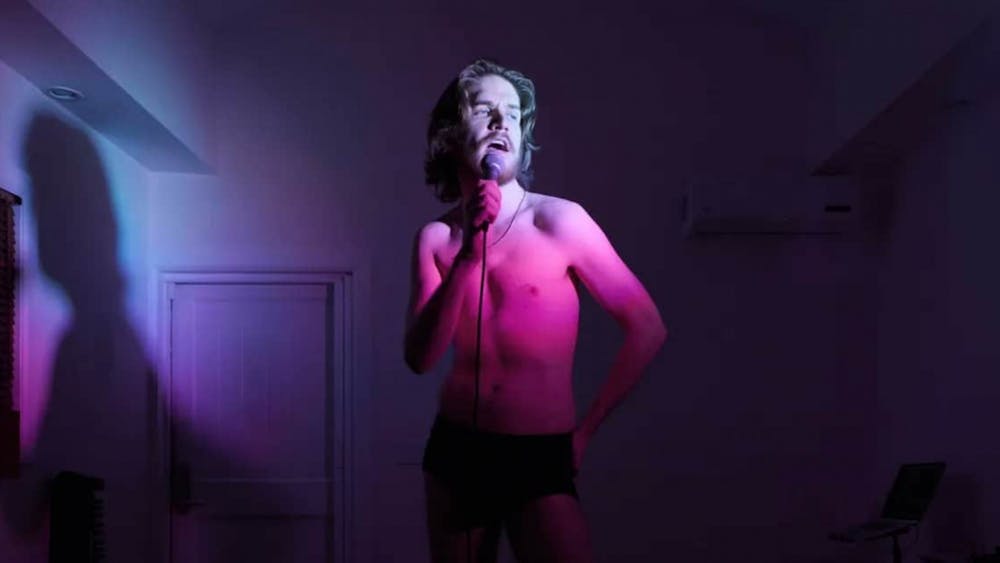
On May 30, comedian Bo Burnham released his Netflix special “Inside,” a one-man performance written, filmed and edited entirely by himself. Created throughout the pandemic, Burnham addressed the boredom and loneliness of quarantine routines, such as facetiming your mom every day or feeling as if you spent the whole day in a cycle of standing and sitting and crying.
The artist has long made self-aware comments regarding the privilege of being a straight white man, or the inability of comedy to create any “real” change, and expanded upon these topics in his latest special. Yet, Burnham also provided a deeply personal and nonetheless relatable perspective into the exhaustion and hopelessness of our modern psyches.
The all-too-honest “That Funny Feeling,” now trending on TikTok to describe waves of dissociation and emptiness, captures how desensitized we’ve become to the constant wave of national traumas and concerns filling our feeds. It’s not that we don’t care — we’re just tired. Tired of the pressure to have an opinion on everything, tired of “the backlash to the backlash to the thing that’s just begun.” But when you can’t break free from the addicting accessibility of our digital drugs, you’re left with nothing but that funny feeling.
Of all the comical cultural commentary, though, none was quite as disturbing as “Welcome to the Internet.” Aptly sung in the style of a cartoon villain, the song speeds up as it progresses, feeling just like falling down the rabbit holes of the internet. The artist described how overwhelming the internet can be: when you have access to, as Burnham describes, “everything all of the time,” it’s nearly impossible to feel satisfied. And for our generation specifically — “Zillennials,” or the older members of Gen Z — most of us were never given a chance to develop as individuals without this online performance anxiety interfering. Yes, we were innocently testing out grainy Instagram filters, but we were also exposed to pro-eating disorder content on Tumblr and leering older men on Omegle. We grew dissatisfied with our appearance, our digital popularity and, for performers such as Bo, our ability to please others.
The comedian rose to fame on YouTube: he started uploading videos 14 years ago, a hunched teenager playing a keyboard in the back corner of his bedroom writing clever puns about race and sex and sexuality and all the other inappropriate topics appropriate among high school boys.
In 2013, he released his first Netflix special, “what.” This was my personal introduction to the artist and his qualms with the entertainment industry, particularly in the first video of him my middle-school self watched, “Repeat Stuff.” He had made previous songs about the simultaneous self-absorbance and exploitation of entertainers, but didn’t truly reveal how it affected him until his 2016 special “MAKE HAPPY.” In the final song of the show, he sneaks his performance anxiety inside jokes about Pringles cans and Chipotle burritos, telling the audience, “I want to please you, but I want to stay true to myself.” He walked off the stage, then took a five-year break from performing.
After “MAKE HAPPY,” Burnham still worked on films such as “Eighth Grade” and “Promising Young Woman,” but did not release any new content until now (and he knows that’s what we, as an audience, have been waiting for: “Daddy made you your favorite, open wide, here comes the content”). He was suffering from panic attacks during live performances, and quarantine — though not beneficial for general mental health — provided an opportunity to create content without a live audience. Yet, it is still demanding to write, record and edit an entire special alone — it took Burnham over a year to create this hour and a half performance. And though there is no doubt that live performances are incomparable to recorded shows, Bo’s “Inside” begs the question: what about artists who prefer to perform online? Should we demand that all artists offer live performances? Should we prioritize our need for content over an entertainer’s mental health?
Bo Burnham was always funny, smart, self-aware and slightly cynical. He still is. But the growing demands of the internet, and the world, for that matter, may require that more of his content involves “just me and my camera, and you and your screen, the way that the lord intended.”
NORWALK, Ohio -- Cruz Pedregon raced to his first Funny Car victory in more than three years Sunday, beating points leader Bob Tasca III in the Summit Racing Equipment NHRA Nationals.
The 57-year-old Pedregon edged Tasca in the final with a 3.958-second run at 324.75 mph in a Dodge Charger SRT Hellcat for the two-time series champion's 37th career victory.
"It's not why I drag race, but this will keep me drag racing," Pedregon said. "It's a good team and I felt like I was kind of holding my team back a little, but I dug deep. You work your way into winning again and these guys taught me to be in that winning mode. It feels good to be back at it."
Steve Torrence won in Top Fuel, Erica Enders in Pro Stock and Matt Smith in Pro Stock Motorcycle.
Points leader Torrence raced to his fourth victory of the season and 44th overall, beating Brittany Force in the final with a 3.736 at 313.88.
Enders had a 6.606 at 205.44 in a Chevrolet Camaro to beat Greg Anderson. She has two victories this year and 31 overall.
Points leader Smith broke the track time record against Steve Johnson in the final, running a 6.782 at 200.56 on an EBR. He has two victories this season and 28 overall.
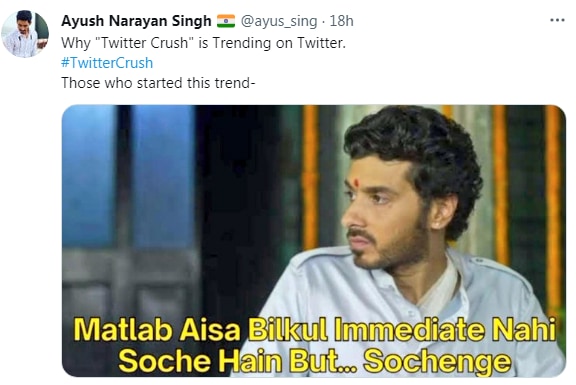
Many have now joined the trend to share hilarious posts under the trend Twitter Crush.
By Trisha Sengupta
PUBLISHED ON JUN 27, 2021 09:25 AM IST
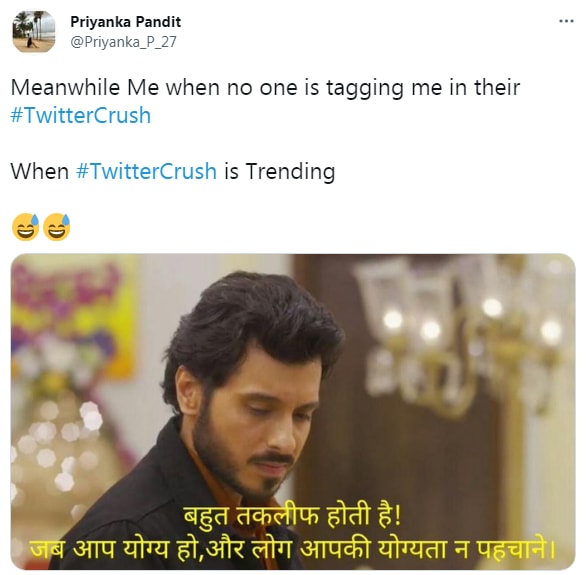
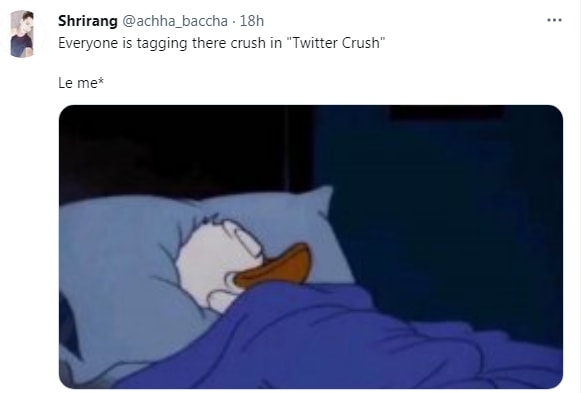
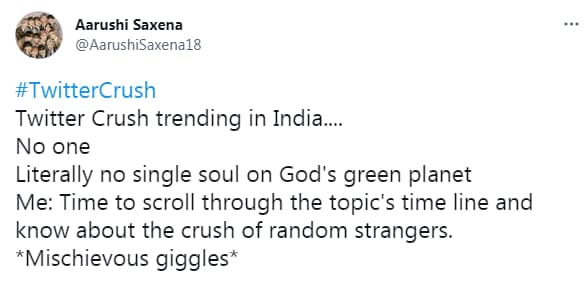
If you're a regular Twitter user, chances are your feed is flooded with posts and memes related to the latest trend ‘Twitter crush’. Throughout yesterday, the hashtag #TwitterCrush was also trending on Twitter and people are still sharing all sorts of posts under the trend. Many have now joined the trend to share hilarious posts. A few have also unleashed their creativity to come up with rib-tickling memes. Here are some of the most chuckle-evoking tweets under the trend.
A few days ago, another trend created a buzz on Twitter. It's the ‘What more hints do you want’ trend. In this trend, people were sharing about the different ways in which they have dropped a hint about their feelings but their crush failed to notice the covert message. The relatable and witty posts under the trend left people chuckling.
What would you post under the Twitter crush trend?
Days after ‘What More Hints Do You Want?’ became a rage on the microblogging site, another hashtag, #TwitterCrush, began trending on Saturday, asking users to let that special one know their feelings.
Many on the platform started talking about their crushes, sharing photos and expressing their feelings. There were mushy posts, sentimental musings and more. Some wrote how they were “waiting” to be tagged by the special someone.
But not everyone was willing to play ball. To avoid revealing their crushes, they turned to humour by sharing hilarious memes. And if someone was mentioned, they in turn shared more memes to laugh over the trend.
Johnny Cueto made his first start for the Giants since MLB's new foreign substance check rules went into effect earlier this week, and got his first taste of the awkwardness after a 1-2-3 inning against the Oakland Athletics in the top of the first Friday night. And, as you'd expect with him, it wasn't a dull moment.
Cueto was on his way back to the Giants' dugout when the umpires caught his attention. As he walked back to them for his first substance check, he raised his arms high and spread them wide, like a peacock brandishing its plume.
This content is not available due to your privacy preferences.
Cueto, who usually removes his hat after the third out anyway, handed it and his glove to the umps to be checked. He also managed to show them his belt buckle without unzipping and dropping his pants.
If you’re looking for an interesting way to take in the city, consider hopping on The Funny Bus. They put on a good show and there’s no two-drink minimum.
CLEVELAND — Mark Twain once said, “humor is mankind’s greatest blessing”.
And that was before you could experience humor while riding around town drinking beer on a fancy old school bus.
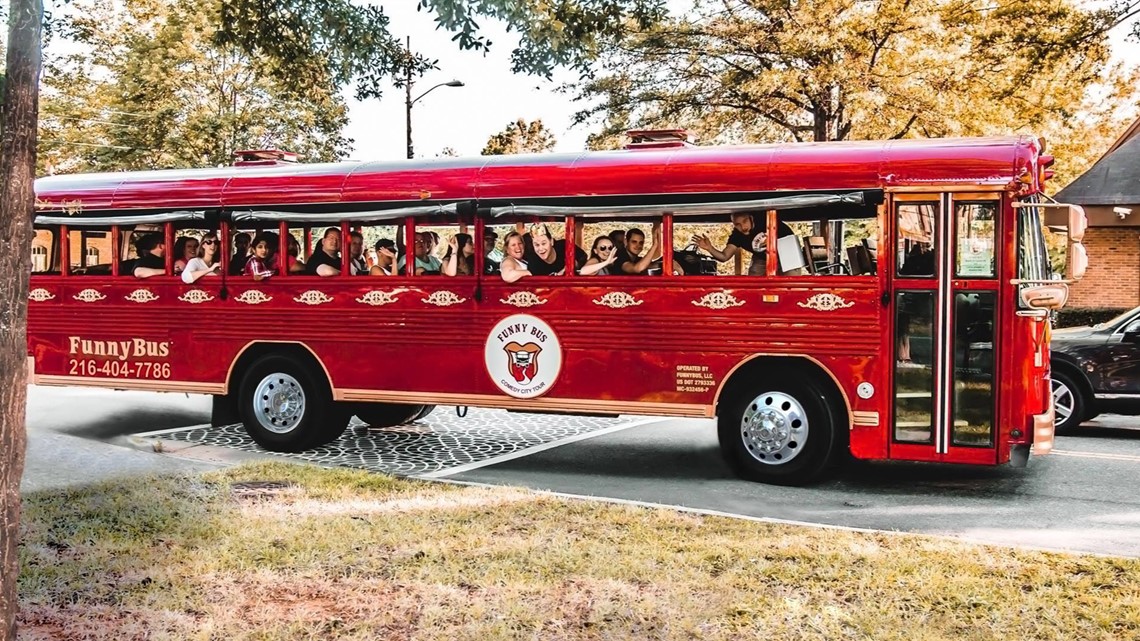
Fortunately for the Greater Cleveland area, that is no longer the case, because we now have Funny Bus CLE-- the area’s new mobile comedy club-slash downtown sight-seeing experience.
She’s a regal, 34 seat urban chariot that’s all tricked out and ready to rock.
According to Funny Bus proprietor Dean Schnurr, people are really digging the new concept, and they're seeing a wide variety of groups booking the tour, from co-workers to bachelorette parties.
The Funny Bus Cleveland offers a unique way to explore the city, hosted by talented local comics who provide guests with both humor and history during a spirited 90-minute jaunt around town.
Our host today was the delightful John Armstrong. I asked him about the differences between performing on a large, moving passenger vehicle as opposed to a more standard stage.
The Funny Bus Cleveland tour takes passengers through downtown, Ohio City, Tremont and the Flats, and they are not shy about interacting with the community.
Contributing to the merriment is an extremely convenient (and Clevelander-friendly) libation policy that keeps spirits high throughout the trip.
So let’s raise a glass to this quirky new local enterprise!
If you’re looking for an interesting way to take in the city, consider hopping on The Funny Bus. They put on a good show and there’s no two-drink minimum.
GLENS FALLS, N.Y. (NEWS10) – It’s a slightly quieter weekend for events in Lake George this weekend, but there’s still plenty to do across the region, with the Luzerne Music Center holding virtual concerts and a local restaurant hosting stand-up comedy.
The North Country Weekend Calendar for the weekend of June 25-27, 2021
Glens Falls Dragons vs. Oneonta Outlaws
What: Glens Falls Dragons baseball game. Tickets are $5 for adults, $3 for kids 12 and under. $59 season tickets; $89 reserved seats; $45 mini 10 game plan.
When: 7 p.m. Friday, June 25
Where: East Field, 175 Dix Ave., Glens Falls
Luzerne Music Center Faculty Artist virtual concert
What: Beginning of the Luzerne Music Center’s concert series of faculty artists, including music from Regina Harris Baiocchi, Paul Nagle, Jake Gunnar Walsh, Witold Lutoslawski, Gabriela Lena Frank and Sergei Prokofiev
The North Country Weekend Calendar for the weekend of June 25-27, 2021
5K Your Way
What: Participants are invited to take part in a 5K from wherever they live, in support of homeless youth through WAIT House. A 5K run is 3.1 miles. Runners are invited to do it all at once or break it up, between June 26 and July 10. The distance can comprise of running, walking, treadmill time and more. Participants can register online.
When: Saturday, June 26-Tuesday, July 6
Where: Runner’s choice
Family Fun Run
What: A quartet of short races around the edge of City Park in Glens Falls, in support of homeless youth through WAIT House. Music and refreshments are included. $10 admission cost, with all proceeds going toward WAIT House.
When: 9-11 a.m. Saturday, June 26
9 a.m.: 4 -year-olds and younger run with parents
9:30 a.m.: 5-9-year-olds run
10 a.m.: 10-13-year-olds run two loops
10:30 a.m.: 13-17-year-olds run two loops
Where: Glens Falls City Park
Library After Hours, Lego Challenge: Wind Racers
What: Childrens’ program challenging kids to build wind-powered Lego cars. Registration required by phone at (518) 747-6406.
When: 1:30-2:30 p.m. Saturday, June 26
Where: Hudson Falls Free Library, 220 Main St., Hudson Falls
The North Country Weekend Calendar for the weekend of June 25-27, 2021
Wildflowers at Pember Nature Preserve
What: Program on wildflower varieties and parts, including a wildflower suncatcher craft.
When: 10 a.m. and noon Sunday, June 27
Where: Pember Nature Preserve, 33 South Grimes Hill Road, Granville
Luzerne Music Center: Student Showcases
What: Piano, duo and solo showcases from the Luzerne Music School
What: Beatles tribute concert, $10 admission. Tickets available by cash or check at the Strand Box Office. (518) 832-3484 for reservations.
When: 3-4:30 p.m. Sunday, June 27
Where: Strand Theatre, 210 Main St., Hudson Falls
Glens Falls Dragons vs. Albany Dutchmen
What: Glens Falls Dragons baseball game. Tickets are $5 for adults, $3 for kids 12 and under. $59 season tickets; $89 reserved seats; $45 mini 10 game plan.
When: 7-9 p.m. Sunday, June 27
Where: East Field, 175 Dix Ave., Glens Falls
A Dose of Comedy at [farmacy] restobar
What: Stand-up comedy by Last Call Comedy Productions, featuring comics who have been featured on Comedy Central,Amazon and elsewhere. One app and drink purchase or more per customer. $15 admission. Limited tickets.
Adam Drake The first time I saw Lolly Adefope do her character Gemma. Ben Rowse The first ever Horne Section in Edinburgh in 2010, with Mark Watson singing about bouncy castles and Tim Key trying to get “Laura Red-door”’s email address.
The funniest sketch I’ve ever seen …
Adam Lazy Susan’s Whimsical French Woman, Written By a Man Who’s Never Met a Woman.
The funniest book I’ve ever read …
Adam No One Belongs Here More Than You by Miranda July. Ben Tim Key’s new book about lockdown. Very funny but also surprisingly sad. Kept thinking about GCSE historians getting it as a “source” in their exams when they study the pandemic. Made me want to do an exam it was that good.
The funniest person I know …
Adam Close tie between Kiri Pritchard-McLean and Al Roberts. Ben It really does have to be Kiri. Unlucky, Al.
The funniest heckle I’ve ever had …
Ben Someone once left us a Post-it note after a gig that said: “My friend Marianne liked it and I really trust her.”
The funniest item of clothing I’ve ever owned …
Ben I once wore a weird Victorian vest that I couldn’t take off for three days and had to cut myself out of.
The funniest meal I’ve ever eaten …
Adam I once tried to make vegan brownies with [comedy trio] Gein’s Family Giftshop and had a breakdown in Tesco looking for adzuki beans.
The funniest hairstyle I’ve ever had …
Adam I grew my hair out at school and was a rake away from Sideshow Bob.
The funniest thing that shouldn’t be funny …
Adam Richard Madeley. Ben When he promoted his novel on Radio 2 he said: “In all my books I have a sense of time.”
I was listening to Faye Webster speak from her home in Atlanta on the “How Long Gone” podcast about how she used to be something of a youth tennis star, how she doesn’t smoke weed but loves canned gin cocktails, how she practices yo-yo tricks while listening to EDM from a video game soundtrack. It was frothy and off-the-cuff, sketching a portrait of a down-home 23-year-old singer-songwriter whose rise to indie notoriety was boosted when her song “Better Distractions” landed on Barack Obama’s annual year-end playlist. (She sounded more concerned about a shipment of Pokémon cards that needed to arrive before she went on tour.) And then, during the interview, she would occasionally say, “I’m crying.” She’d say it when something was funny, the same way people type “I’m crying” when something is funny. But Webster said it dryly, with a kind of clinical detachment. She was neither laughing nor crying.
This really captures the way Webster approaches her songwriting. Laughter and tears, boredom and loneliness, scummy landlords and Linkin Park, they all have the same density in her songs. Every moment on her fourth album, I Know I’m Funny haha, floats by at the same meaningless speed, the air so thick and humid that lines don’t land, they just slowly disappear. In the world of Webster’s lolling indie country and twangy R&B, comedy and tragedy are indistinguishable. Saying “I’m crying” out loud could scan as a wry adoption of online argot, winking at a feeling but a little afraid of it, how if you text a friend something really honest you might take out a little “haha” as an insurance policy.
But because Webster is such a wise and interesting lyricist, and because she peppers her songs with five-word phrases that could plot an entire novel, there’s so much more to I Know I’m Funny haha than its wan title might suggest. Scenes and feelings are rendered so simply and matter-of-factly that sometimes it’s like Webster is singing back the minutes of a meeting. Good days bleed into bad and back into good—she’s crying in a good way, she’s laughing because she’s just been hurt, and honestly who can tell the difference anymore? With Webster’s downy voice and a pedal-steel player named Matt “Pistol” Stoessel who almost steals the show, the album strikes a perfect balance between classic country stoicism and the sound of the saddest person you follow on social media.
All of the same pieces were in place on 2019’s Atlanta Millionaires Club, an album as glacially paced and melancholy as this. But there’s a brighter twinkle to the songs, a looser grip on where they go and how they work, more space for the band and the orchestration. “In a Good Way” takes a minute-and-a-half walk in the middle just to simmer in a ’90s nu-soul groove; the title track doesn’t even have a chorus; “Kind Of” ends on a three-minute vamp with the precise vibe of a Key West bar band playing a bossa nova tune at sunset. Webster nods to fellow Atlantan Rich Homie Quan, singing on the chorus about feeling some type of way, but, again, taking out a little “kind of” as insurance. It’s a song that’s speechless, trepidatious, almost incredulous about falling in love, and still it stretches out as if she never wants whatever feeling this is to end.
Webster is an assassin who comes out of the shadows with something witheringly funny or totally devastating. And because this album comes pre-packaged with a hammock and warm breeze, it’s hard to do anything but smile when she delivers the blow. On the title track, Webster talks to her partner about his pretty sister in that loving but condescending way couples talk about each other’s siblings. “I made her laugh one time at dinner,” she sings. “She said I’m funny and then I thanked her/But I know I’m funny haha.” You see the whole spectrum of her personality in that one line—polite, sensitive, arrogant, actually funny—especially in the staccato way she sings “haha.” She elevates a forgettable phrase we all type all of the time into a moment that defines her character as a songwriter.
There is, in fact, a great deal of crying on the record. There is one good cry (“In a Good Way”) but for the most part, it’s rough. She cries so much it hurts, asks herself if she’ll stop crying for once, cries for no reason, thinks that she might just sit around and cry. None of those lines are sad in and of themselves, but they create the vulnerable atmosphere for Webster to detail the absurd magnitude of her sadness: “There’s a difference between lonely and lonesome/But I’m both all the time,” she sings, ever the grammarian. But Webster’s great gift as a young saint of the bummer jam is how she captures emptiness. She absolutely owns the void that swallows all feeling, that nothingness through which all emotion must travel. One line from “A Stranger” says it all: “You know, I used to love getting bored/But now, without you, I have so much time to think there’s nothing to think about anymore.”
Yet the record never sinks into a dirge or sounds anemic. It is full and stoned and beautiful the entire time. The mood reminds me of smoky old Billie Holiday tunes, or the sunny stroll of a João Gilberto record, or the twilight magic of classic pedal-steel-driven songs like “Harvest Moon” or “Sleep Walk.” The band does a remarkable job of giving subtle little flourishes just a second or two to shine. The way Webster trills between two notes on the chorus of “Sometimes” and the strings follow her in unison; the way the piano ascends and the pedal steel descends at the end of “Better Distractions”; the way Webster drops the line, “There’s so much going on/My grandmother’s dead” in “A Dream With a Baseball Player,” a song about a teenage crush on Atlanta Braves outfielder Ronald Acuña Jr. I Know I’m Funny haha is full of this delicious texture. It might come off a little shallow, but it reveals its great depth at its own unconcerned pace. It’s probably one of the best records of the year lol.
Avoiding collision requires visibility which is hard in the fog, and once was a whole lot harder before pinpoint navigation tools. But what doesn’t kill us makes us stronger and provides good stories… here’s one of them:
From Alex Watters:
Here in Nova Scotia fog is a pretty constant enemy. Years ago, I can’t recall how many, we were heading for the finish line of the Marblehead to Halifax Race on Intuition, a Holland 50ish footer. Visibility was as close to zero as possible and we were running on starboard tack with the chute up.
It was only blowing about 8 knots so we weren’t really haulin’, but the finish mark is also a ship’s channel mark and we could hear the hum of a ship coming at us from astern. A quick radio call to Halifax traffic confirmed a Russian (fishing) factory ship was inbound and not responding to their radio calls.
As the ship got louder and louder with no horns or radio response, we got pretty nervous and considered a course change which likely would mean missing the finish line. About the time we had decided to change course, the ship’s horn sounded and we all looked straight up….it was right beside us….if I’d thrown a tennis ball it would have bounced back almost immediately.
Clearly they had seen our radar reflector and were playing games with us, though not a very funny game. Literally two minutes later we crossed the finish line and heaved a giant collective sigh of relief. Perhaps five minutes later the fog lifted a bit and we saw the ship ahead of us, that’s when we appreciated just how big a factory ship can be. Good times!
As strange as it may seem, the video game-inspired horror comedy Werewolves Within is less about a monster terrorizing a small Vermont town in the dead of winter and more about a single person defending his right to be a nice person in a place where the population seems hellbent on turning on itself. As one might expect, director Josh Ruben (the writer/director/star of Scare Me), working from a screenplay by Mishna Wolff, turns the town of Beaverfield into a microcosm of America, with its newly appointed forest ranger Finn (Sam Richardson, in a much-welcome leading role) trying to keep the peace without sacrificing his goodly nature. Working side by side with postal worker Cecily (Milana Vayntrub, probably best known as the woman from the AT&T commercials, but a gifted comic actress in her own right), the two must also unlock the mystery of a series of violent deaths in town that seem to point to the possibility that a werewolf has been set loose.
Image courtesy of IFC Midnight
The films begins with Finn’s arrival in town and Cecily volunteering to show him around and introduce him to as many people as she can on her route, which doubles as a way for the two to get to know each other and even flirt at bit. Because of its isolated nature, Beaverfield is front loaded with eccentrics who value their privacy, living side by side with hipsters who are always on the lookout for the next hot location to invade and drive up the home values. Add to this equation pipeline entrepreneur Sam Parker (Wayne Duvall), who is tempting the residents to sell their property to him so he can turn this place into an industrial wasteland, making him both an early candidate for being killed but also being the killer. We movie through the town at such a rapid pace that not everyone we’re introduced to stands out, but with such gifted character actors as Michaela Watkins, Michael Chernus, Cheyene Jackson, and Harvey Guillén, they go a long way at establishing themselves in ways that go beyond the screenplay.
But like many comedy ensembles, there’s almost an annoying level of very funny people all vying to be noticed, some by talking at full volume the entire time and some by acting weird and abrasive to stand out. Thankfully, director Ruben is a gifted talent at traffic-controlling his cast, and while nearly everyone gets a moment or two to stand out, it’s rare to see people stepping on each other’s jokes. The town folks represent a cross section of the nation, with many different races, sexual preferences, ages, and levels of paranoia on hand. It should also be noted that although many clues do point to a werewolf, the film leaves open the possibility that this idea may just be speculation run amok, something that apparently happens quite a bit in Beaverfield. Still, just about everyone in the cast takes turns being suspected of being the killer creature at one point, keeping the guessing game very much alive.
Examining the very American idea of blaming the other and needing an enemy to find relevance in one self is nothing new to the horror or science-fiction genres, but Werewolves Within moves through the subject matter with a certain energy and humor that is rarely present. With Richardson and Vayntrub at the charming center of this madness, the movie has a great deal going for it from the outset. And when we enter the final act, when the suspense and violence are kicked up a notch, things get especially juicy and fully entertaining. I’m not sure what it says about the movie that the more characters who die, the more enjoyable the film gets, but I’ll always take horror work that finishes strong and offers a few surprises along the way.
The film opens theatrically on Friday, including at the Landmark Century Centre Cinema.
Did you enjoy this post? Please consider supporting Third Coast Review’s arts and culture coverage by making a donation. Choose the amount that works best for you, and know how much we appreciate your support!
_1624881061292_1624881070312.jpg)

:strip_exif(true):strip_icc(true):no_upscale(true):quality(65):fill(FFF)/d1vhqlrjc8h82r.cloudfront.net/06-28-2021/t_af3c70a83e3e469e97d7907887d87d57_name_image.jpg)










 As strange as it may seem, the video game-inspired horror comedy Werewolves Within is less about a monster terrorizing a small Vermont town in the dead of winter and more about a single person defending his right to be a nice person in a place where the population seems hellbent on turning on itself. As one might expect, director Josh Ruben (the writer/director/star of Scare Me), working from a screenplay by Mishna Wolff, turns the town of Beaverfield into a microcosm of America, with its newly appointed forest ranger Finn (Sam Richardson, in a much-welcome leading role) trying to keep the peace without sacrificing his goodly nature. Working side by side with postal worker Cecily (Milana Vayntrub, probably best known as the woman from the AT&T commercials, but a gifted comic actress in her own right), the two must also unlock the mystery of a series of violent deaths in town that seem to point to the possibility that a werewolf has been set loose.


