To say that we all collectively could use a laugh is a vast understatement. Luckily, rabbi, humorist, author, interfaith leader, academic, community activist and “disciple of joy” Reb Moshe Waldoks joins us to lift our spirits.
Rabbi Moshe Waldoks (Courtesy photo)
The author of the classic and comprehensive “The Big Book of Jewish Humor,” Reb Moshe takes The Vibe of the Tribe mic (and doesn’t let go) to share his story and philosophy.
Tune in and laugh along as he describes building a vibrant community at Temple Beth Zion in Brookline using the power of “Yom Kippur jokes” and meditation, his explanations of what is and is not “Jewish humor” and the importance of finding the joy—not just the oy—of Jewish life. You don’t want to miss this hilarious episode as Reb Moshe—and, to a lesser extent, Miriam and Dan— cover everything from Bernie Sanders mittens memes to inadvertent Talmud hilarity, plus a vociferous disagreement about the merits (or lack thereof) of Larry David.
Produced by Miriam Anzovin and edited by Jesse Ulrich, with music by Ryan J. Sullivan.
A few minutes into Bo Burnham’s Netflix special, Inside, filmed in a single room in his house over the course of the pandemic, the comedian launches into his second number, concerning the purpose of comedy itself. “The world is changing,” Burnham croons at his keyboard. “The planet’s heating up. What the f*** is going on?” The song turns into a retrospective of the last year — the protests, the drought. “The more I look, the more I see nothing to joke about,” he goes on.
Then an angelic chorus from above sends Burnham on an ironic mission: “healing the world with comedy” because “the world needs direction.” “From a white guy like me,” Burnham juts in. “Bingo!” the ethereal voice says.
Burnham’s genre-defying special is much more than a comedy, however. It’s a social commentary on the precarity of life in the 2020s, especially online life. It begins with (sort of) lighthearted music videos in Burnham’s style, formed in YouTube videos shot in his childhood bedroom in the mid-aughts. But the songs in Inside, parodying the classic photos you see on white women’s Instagram accounts and chronicling the perils of sexting with emojis, coexist with explorations of serious topics. In one song, Burnham’s sock puppet says, “Don’t you know? The world is built with blood! And genocide and exploitation!” Near the beginning of Inside, Burnham says that he embarked on the project “to distract me from wanting to put a bullet into my head.” Over the course of the show, months in isolation and the weight of the world’s problems begin to wear on Burnham, who ends up sobbing on camera.
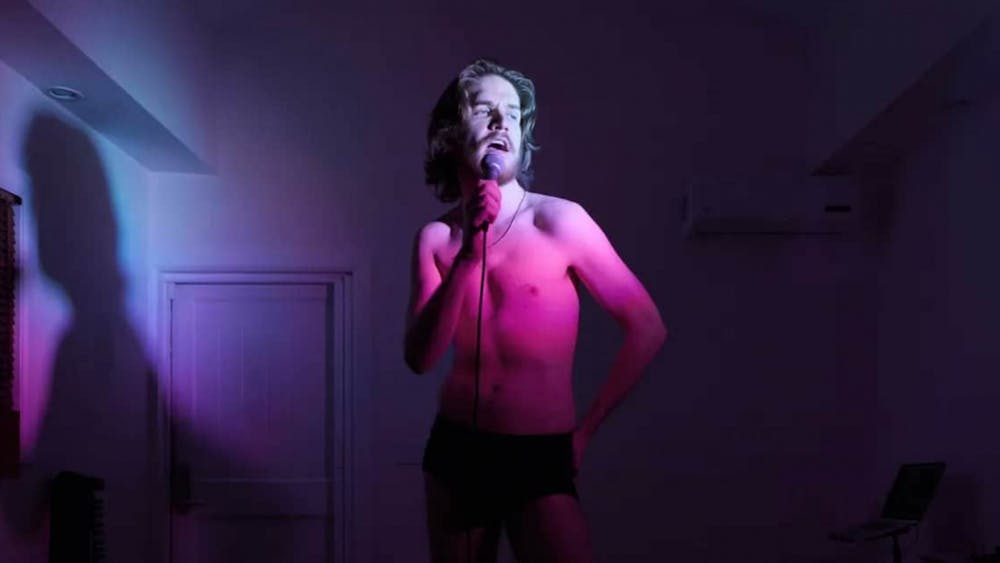
Critics and regular people alike love Inside, according to Rotten Tomatoes. Slate called it “one of the most sincere artistic responses to the 21st century so far.” That might seem like unexpectedly high praise for an eccentric, disturbingly self-aware one-man production where the one man spends a good chunk of 80 minutes dancing in his underwear. (You have to see it to get it.)
Inside isn’t really about the climate crisis. It’s an exploration of how to be a decent person in an indecent world, while facing up to your own role in it. Burnham, for example, skewers the performative nature of social media and points out how the internet is breaking everyone’s brains, while at the same time performing for the internet. But the overheating planet is a recurring theme for a reason. For Burnham, it serves as a touchpoint for doom — it’s there, haunting you in the background, even when your mind is bouncing between a million other things. There’s hardly time to comprehend the enormity of it, let alone do much about it, especially if you’re anywhere as depressed as Burnham.
In one jaunty tune, “Welcome to the Internet,” performed as if it were a movie villain theme, Burnham explains how the internet overstimulates you and inflames your inner demons, offering “a little bit of everything all of the time.” Later in the show, the lyrics of “That Funny Feeling,” with Burnham playing acoustic guitar, appear to be a jumble of disjointed subjects — until you consider that he might be describing the emotionally numbing rollercoaster of scrolling through social media. Seeing news about civil wars next to tweets from Kentucky Fried Chicken and Bugles? The juxtaposition of catastrophes and fluff feels so “funny,” perhaps, because all of these things are packaged as “content,” flattened into our newsfeeds, and presented with equal weight.
A scene from “Welcome to the Internet.” Netflix
In his offbeat way, Burnham manages to capture a growing disaffection with online life — and how these new patterns present a threat to well-being. A scientific paper out this week in the Proceedings of the National Academy of Sciences sums up how the internet has radically restructured how we communicate in a couple decades, with the chief goal of maximizing “engagement” to sell ads … instead of, you know, trying to help people or improve the world. The algorithms that determine what people see online, according to these collective behavior experts, “are typically designed to maximize profitability, with often insufficient incentive to promote an informed, just, healthy, and sustainable society.”
Burnham contrasts digital reality, where you can find and believe anything you want, with physical reality — including the unrelenting progress of global warming. “The whole world at your fingertips, the ocean at your door,” Burnham sings in “That Funny Feeling.” “The live-action Lion King, the Pepsi Halftime Show / Twenty-thousand years of this, seven more to go.”
That “seven years” line appears to reference the Climate Clock, a sort of ticking-time bomb counting down the years until the planetary apocalypse. The project gives humanity a deadline of 2028 “to enact bold, transformational changes in our global economy” to prevent global warming from reaching “a point of no return that science tells us will make the worst climate impacts likely inevitable.”
Burnham’s doom-and-gloom serves a dual purpose, speaking to both the climate crisis and his own depression. “All Eyes on Me” is the climax of the show, an auto-tuned banger about coping with anxiety — in the middle of it, he takes a break from singing to explain that he quit live comedy because he kept having panic attacks on stage. But it’s also a song about coming to terms with where the world is heading (“We’re going to go where everybody knows, everybody knows”). The third verse:
You say the ocean’s rising like I give a shit
You say the whole world’s ending, honey, it already did
You’re not gonna slow it, Heaven knows you tried
Got it? Good, now get inside
There is a moment of clarity in the song where Burnham turns off the autotune and starts yelling at the viewer, “Get up. Get up. I’m talking to you! Get the f*** up!”
It’s a jarring wake-up call, and a reminder: This might be a comedy special, but Burnham is not joking about the climate apocalypse.
Haas team principal Guenther Steiner says the decision to present Nikita Mazepin with a spinning top ahead of the Styrian Grand Prix was an attempt to lighten the mood around the rookie.
Mazepin has been coined the nickname ‘Mazespin’ for the number of times he has swapped ends during a challenging first year in Formula 1 so far, but on Sunday morning he posted a video showing Steiner giving him a present that featured a spinning top.
In the video, Steiner says: “There is a little present for you so you can keep on Mazespinning… So now you spin this one, it’s better than spinning the car!”
Asked about the joke following the race in Austria, Steiner says it was simply an attempt to try and show Mazepin’s sense of humor after being heavily criticized on social media.
“I think he got used to social media storms!” Steiner said. “He was on the wrong side at some stages, and in the end social media can be good or bad to you. It was an idea in the team to do this to him and then we did it.”
And Steiner believes Mazepin did not need convincing to be part of the joke, as the team tries to improve his reputation after the Russian posted a video of himself groping a female in a car late last year.
“It was decided to be a little bit funny,” Steiner said. “We can also be funny here – everything on social media about Nikita is about bad things so there can also be good things, try to use it to your advantage and get away from the naysayers.
“He was not uncomfortable, he was pretty happy. You know there is a happy Nikita Mazepin as well. He’s not this unhappy kid you all think he is, this miserable young man, he’s got a good sense of humor.”
The dogecoin price shot higher, climbing 5% over the last 24 hours, after Musk said it is "important to support" a dogecoin upgrade proposal to significantly reduce dogecoin transaction fees—something Musk has previously said he wants to do in order to make dogecoin "the currency of Earth".
Sign up now for CryptoCodex—a free, daily newsletter that explains the world of bitcoin with brevity. Arriving in your inbox at 7am EDT every weekday
Tesla billionaire Elon Musk has rejected bitcoin in favor of dogecoin this year, helping the ... [+]meme-based cryptocurrency's price soar many thousands of percent.
Getty Images
"This proposal to all dogecoin stakeholders suggests to reduce average fees 100x for standard transactions on the dogecoin chain, split full control over all aspects of fees between miners and node operators, rely less on core development, and bring back a functional (small) free transaction space that incentivizes keeping the network healthy," Patrick Lodder, a dogecoin core developer that has been involved with the memecoin since 2014, posted to the Reddit thread detailing the upgrade proposal.
MORE FOR YOU
Dogecoin's price explosion this year, up 11,000% on this time 12 months ago, has helped rejuvenate interest in the stagnating cryptocurrency—and led to Sam Bankman-Fried, the billionaire chief executive of crypto exchange FTX, naming dogecoin as the "asset of the year for 2020 and 2021."
Musk, the self-appointed "technoking" of Tesla who was once voted dogecoin's CEO in a tongue-in-cheek Twitter poll, has alienated much of the bitcoin community with his dogecoin support in recent months. Many bitcoin investors believe Musk's playful antics to be damaging to bitcoin.
The dogecoin price has climbed as a result of Elon Musk's support of the upgrade but remains ... [+]significantly down on its all-time high of over 70 cents set in May.
Coinbase
However, despite pulling the plug on Tesla's acceptance of bitcoin payments in April, the electric car company continues to hold most of the $1.5 billion worth of bitcoin it bought early this year and Musk has indicated he's willing to restart Tesla's bitcoin support if those that secure the bitcoin network and validate transactions, known as miners, reduce bitcoin network's sky-high carbon footprint.
Meanwhile, the bitcoin price has soared over the weekend, despite news that major bitcoin and cryptocurrency exchange Binance is facing expulsion from the U.K. after the country's regulator ruled it can't conduct any "regulated activity."
On May 30, comedian Bo Burnham released his Netflix special “Inside,” a one-man performance written, filmed and edited entirely by himself. Created throughout the pandemic, Burnham addressed the boredom and loneliness of quarantine routines, such as facetiming your mom every day or feeling as if you spent the whole day in a cycle of standing and sitting and crying.
The artist has long made self-aware comments regarding the privilege of being a straight white man, or the inability of comedy to create any “real” change, and expanded upon these topics in his latest special. Yet, Burnham also provided a deeply personal and nonetheless relatable perspective into the exhaustion and hopelessness of our modern psyches.
The all-too-honest “That Funny Feeling,” now trending on TikTok to describe waves of dissociation and emptiness, captures how desensitized we’ve become to the constant wave of national traumas and concerns filling our feeds. It’s not that we don’t care — we’re just tired. Tired of the pressure to have an opinion on everything, tired of “the backlash to the backlash to the thing that’s just begun.” But when you can’t break free from the addicting accessibility of our digital drugs, you’re left with nothing but that funny feeling.
Of all the comical cultural commentary, though, none was quite as disturbing as “Welcome to the Internet.” Aptly sung in the style of a cartoon villain, the song speeds up as it progresses, feeling just like falling down the rabbit holes of the internet. The artist described how overwhelming the internet can be: when you have access to, as Burnham describes, “everything all of the time,” it’s nearly impossible to feel satisfied. And for our generation specifically — “Zillennials,” or the older members of Gen Z — most of us were never given a chance to develop as individuals without this online performance anxiety interfering. Yes, we were innocently testing out grainy Instagram filters, but we were also exposed to pro-eating disorder content on Tumblr and leering older men on Omegle. We grew dissatisfied with our appearance, our digital popularity and, for performers such as Bo, our ability to please others.
The comedian rose to fame on YouTube: he started uploading videos 14 years ago, a hunched teenager playing a keyboard in the back corner of his bedroom writing clever puns about race and sex and sexuality and all the other inappropriate topics appropriate among high school boys.
In 2013, he released his first Netflix special, “what.” This was my personal introduction to the artist and his qualms with the entertainment industry, particularly in the first video of him my middle-school self watched, “Repeat Stuff.” He had made previous songs about the simultaneous self-absorbance and exploitation of entertainers, but didn’t truly reveal how it affected him until his 2016 special “MAKE HAPPY.” In the final song of the show, he sneaks his performance anxiety inside jokes about Pringles cans and Chipotle burritos, telling the audience, “I want to please you, but I want to stay true to myself.” He walked off the stage, then took a five-year break from performing.
After “MAKE HAPPY,” Burnham still worked on films such as “Eighth Grade” and “Promising Young Woman,” but did not release any new content until now (and he knows that’s what we, as an audience, have been waiting for: “Daddy made you your favorite, open wide, here comes the content”). He was suffering from panic attacks during live performances, and quarantine — though not beneficial for general mental health — provided an opportunity to create content without a live audience. Yet, it is still demanding to write, record and edit an entire special alone — it took Burnham over a year to create this hour and a half performance. And though there is no doubt that live performances are incomparable to recorded shows, Bo’s “Inside” begs the question: what about artists who prefer to perform online? Should we demand that all artists offer live performances? Should we prioritize our need for content over an entertainer’s mental health?
Bo Burnham was always funny, smart, self-aware and slightly cynical. He still is. But the growing demands of the internet, and the world, for that matter, may require that more of his content involves “just me and my camera, and you and your screen, the way that the lord intended.”
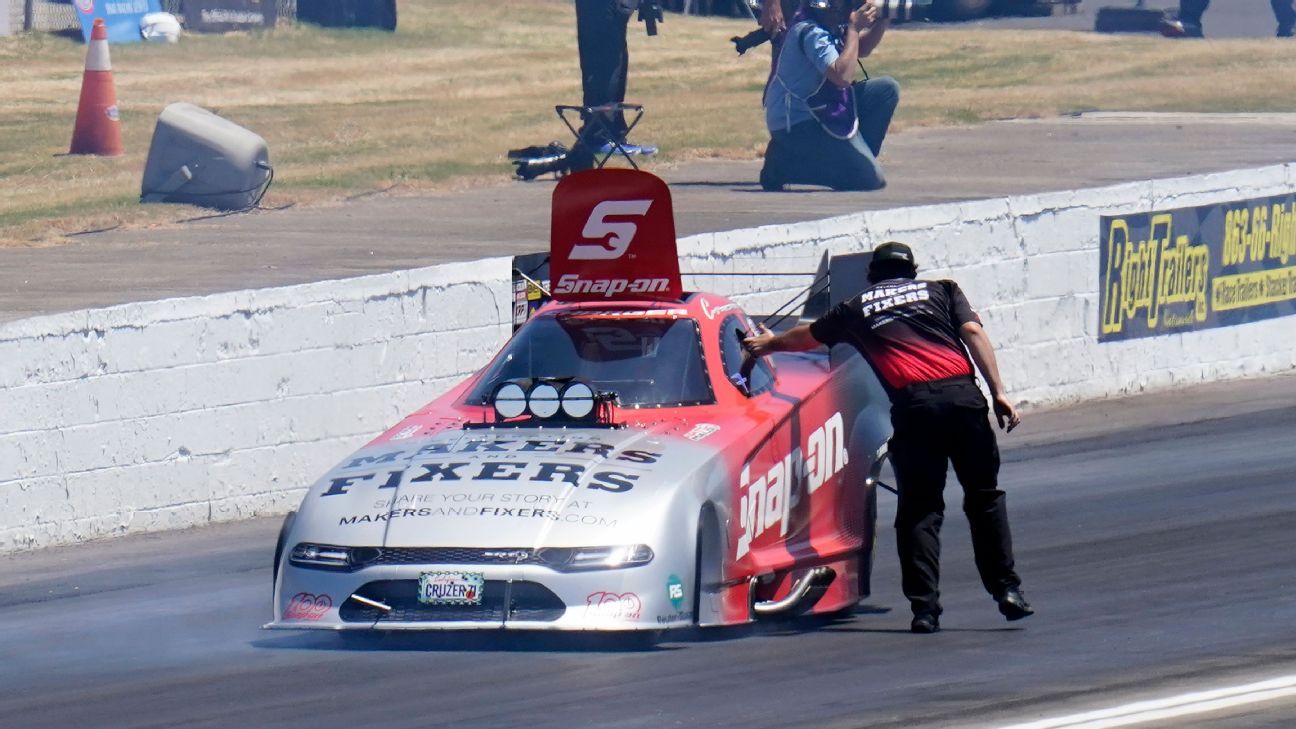
NORWALK, Ohio -- Cruz Pedregon raced to his first Funny Car victory in more than three years Sunday, beating points leader Bob Tasca III in the Summit Racing Equipment NHRA Nationals.
The 57-year-old Pedregon edged Tasca in the final with a 3.958-second run at 324.75 mph in a Dodge Charger SRT Hellcat for the two-time series champion's 37th career victory.
"It's not why I drag race, but this will keep me drag racing," Pedregon said. "It's a good team and I felt like I was kind of holding my team back a little, but I dug deep. You work your way into winning again and these guys taught me to be in that winning mode. It feels good to be back at it."
Steve Torrence won in Top Fuel, Erica Enders in Pro Stock and Matt Smith in Pro Stock Motorcycle.
Points leader Torrence raced to his fourth victory of the season and 44th overall, beating Brittany Force in the final with a 3.736 at 313.88.
Enders had a 6.606 at 205.44 in a Chevrolet Camaro to beat Greg Anderson. She has two victories this year and 31 overall.
Points leader Smith broke the track time record against Steve Johnson in the final, running a 6.782 at 200.56 on an EBR. He has two victories this season and 28 overall.